For my Adaptation Project, I’ve chose to adapt an article written by Karan Mahajan for The New Yorker, of the same title as this post.
Here’s the link:
This piece of journalism offers a compelling narrative as it follows the unique career of the Indian blogger, Mayank Austen Soofi. To preface, Soofi is a well-experienced writer whose literary passions were ignited by the works of authors like Jane Austen and Marcel Proust. He’s worked diligently over the years to accumulate a hefty library of publications. Soofi’s portfolio includes a daily newspaper column, regular Instagram content, and his blog titled The Delhi Walla.
The blogger specializes in profiling individuals from many different parts of Delhi, a practice reflected in his lifestyle as a wandering romantic keen on sharing his vision of a metropolis, as well as its many inhabitants. While this vision is vibrantly imaginative, it also tends to convey some dismal realities of the poverty in India’s capital city.
A detail that I absolutely loved from this profile was how Mahajan describes Soofi’s ritual of writing profiles for his readers in exchange for a bed to sleep in. This only adds to Soofi’s mystique as a nomadic creative who adventures through the bustling sprawl of market districts and slums, amplifying the voices of those who would otherwise fade into the mass public.
Mahajan does a fantastic job of using the written word to illustrate glimpses of these adventures. The reason this article stood out so much to me as a great option for adaptation was because of the author’s stimulating descriptions of Delhi as Soofi voyages endlessly through the crowds, cataloguing profiles from every underrepresented corner of the city. While reading the piece, the mental cinema of these descriptions came so easily and so vividly, that I feel like they would translate perfectly into comics panels. There were of course, a couple instances in particular that I would love to adapt.
The first instance occurs near the beginning of the piece, when Soofi takes Mahajan to a tiny brothel, the proprietor of which lives in the waiting room with his family.
After being accosted on the twilit G.B. Road by pimps in T-shirts who asked ‘Jana hai?’ (‘Want to go?’), we climbed a flight of steep, uneven, betel-stained stairs and entered a large pistachio-green waiting room with a low ceiling. A single light bulb cast a bleary gleam on framed pictures of the Hindu god Krishna, the Sikh saint Guru Nanak, and a Muslim Sufi shrine—a menu of sin absolvers to choose from. A tall woman in a sari shook our hands and led us into the next room, where we were greeted by a domestic scene: two men sprawled on the ground drinking tea in front of an industrial fan; a five-year-old boy in a skullcap, praying on a mat; two young men loafing before a PC; and two sacrificial goats, straining into the room from their tether on the balcony. This was the one-room living space of the proprietor’s family. At night, the adults slept on the floor of the pistachio-green waiting room; when customers arrived, later in the evening, they would step over and around the adults’ supine bodies.”
This is such an interesting scene that I think could be adapted into the comics format beautifully. As discussed in chapter 3 of McCloud, I think the use of Subject-to-Subject transitions would fit perfectly here. I imagine a wide panel taking up the top row of the page, in which we see the entire pistachio-green waiting room and its occupants. In the rows beneath, there would be smaller individual panels that depict each subject in the small space with greater detail, and possibly some excerpts from the article’s text.
Another passage from the piece that would inform the visual elements of my adaptation was when Mahajan followed Soofi to Nizamuddin.
When I visited Nizamuddin with Soofi, after tea at the brothel, the alleys were dense with diners thronging food stalls; parked scooters, with live goats tied to them, in preparation for Ramadan; bent beggars, asking for alms; and a group of skullcapped men, from the evangelical group Tablighi Jamaat, solemnly sitting at a long table.”
There are a few passages similar to this one, where Mahajan telepathically illustrates these energetic Delhi set pieces. From a comics perspective, I just think it would be so cool to follow Soofi from panel to panel through the corners and alleyways of the city. As I read the article, although Mahajan’s writing provided a strong mental image, I wished I could really see some of these scenes. The yearning I experienced was a heavy indicator that I should try to adapt the piece into the comics format.
Here are some images from the Delhi Walla blog site.
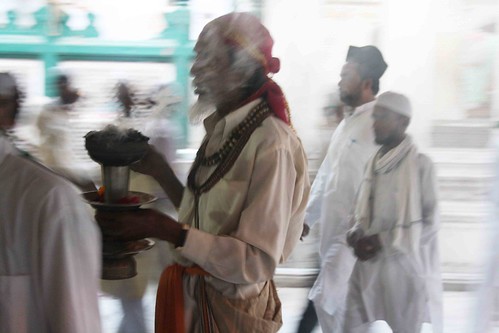
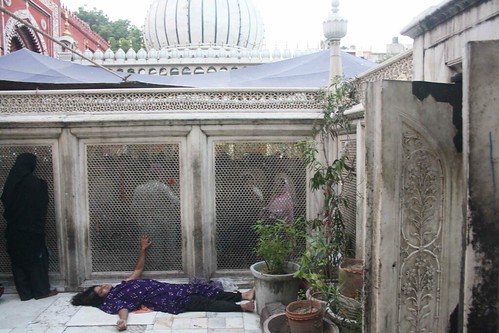
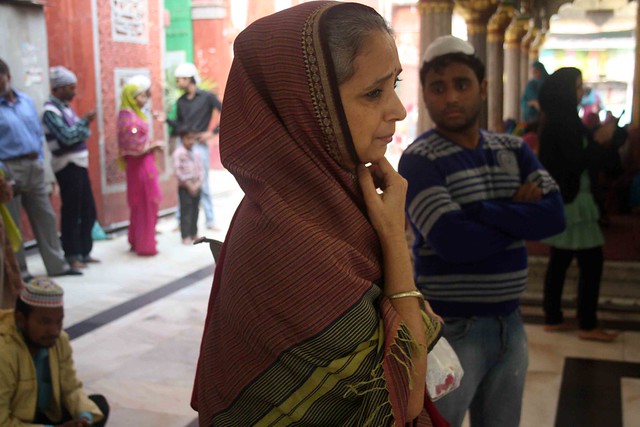
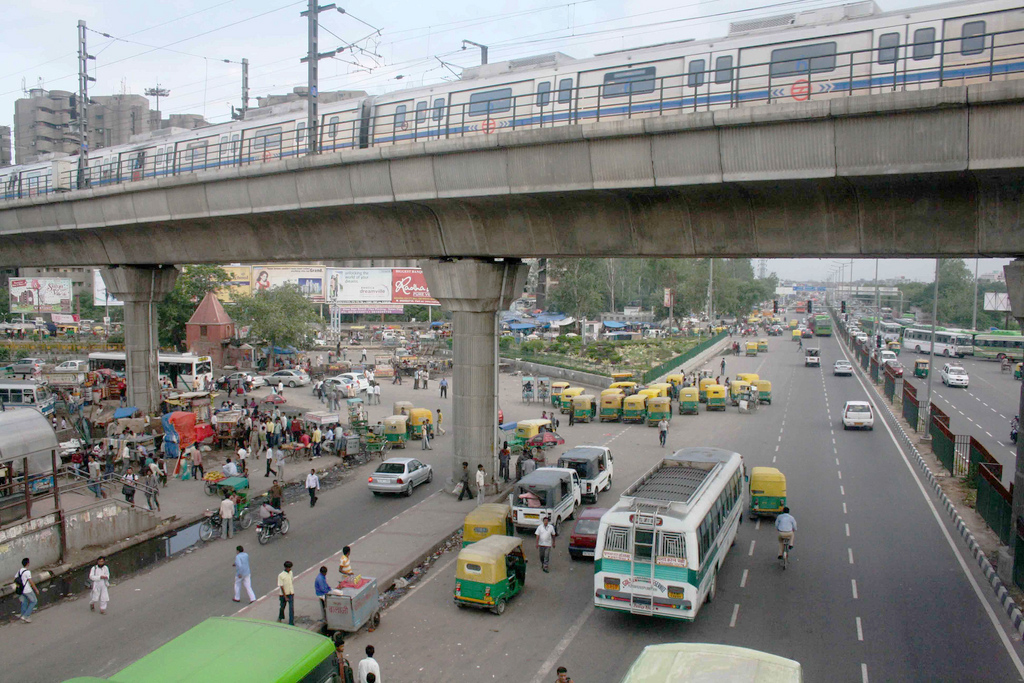
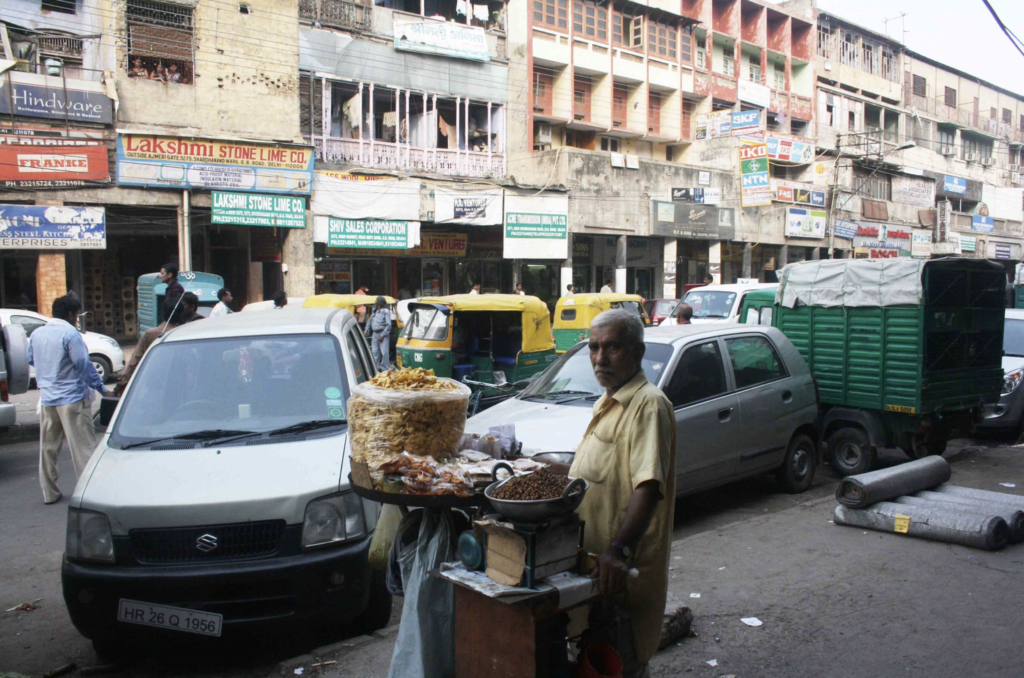
I will spend more time looking through Soofi’s blog, but upon first glance I thought these images might be helpful for visual reference. For photos of the brothel, mentioned above, I think I might have to purchase Soofi’s book, Nobody Can Love You More.